
On the automotive manufacturing floor, many issues don’t begin as complex problems.
Was the steel sheet picked up by the suction cup? Did the skid reach its position? Is the clamp actually gripping? Has the cylinder completed its stroke? Are the car door, fixture, or pallet in the correct location?
These judgments sound elementary, yet on a high-speed production line, they become critical. Robots cannot rely on intuition, nor can conveyor lines depend on constant human monitoring. Before any action proceeds, a clear signal is required: Yes or No; Arrived or Not.
This is precisely why proximity sensors are ubiquitous in automotive manufacturing.
01. Stamping: First, Confirm “Material Presence”
Stamping is the initial stage of car manufacturing. Steel sheets undergo feeding, stamping, and transfer to form body panels such as doors, fenders, and roof panels. With fast cycles and dense equipment movements, precise coordination between robotic arms, suction cups, conveyors, and presses is essential.
Take a robotic arm’s suction cup gripping a blank: the worst-case scenario is “the motion executed, but the sheet wasn’t secured.” Without timely detection, subsequent handling may halt, risking collisions or panel damage.
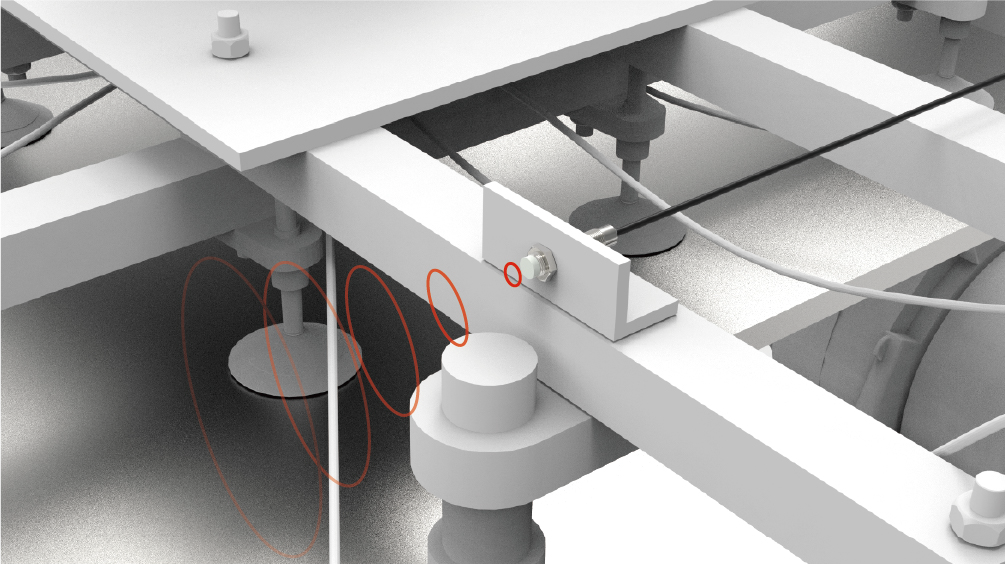
Post-stamping inspection follows the same logic. Sensors mounted in gaps along conveyors or belts confirm whether stamped parts have arrived or passed through, triggering signals for the next steps—pickup, transfer, or sorting.
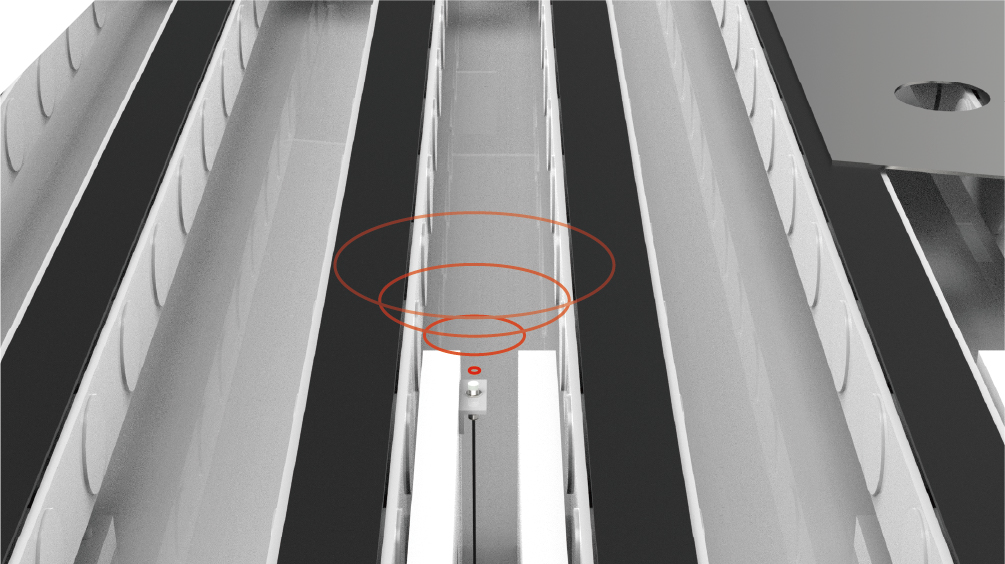
These detection points are small, but their absence can disrupt the entire line’s rhythm.
02. Body Shop: Focus on “Positioning” and “Clamping”
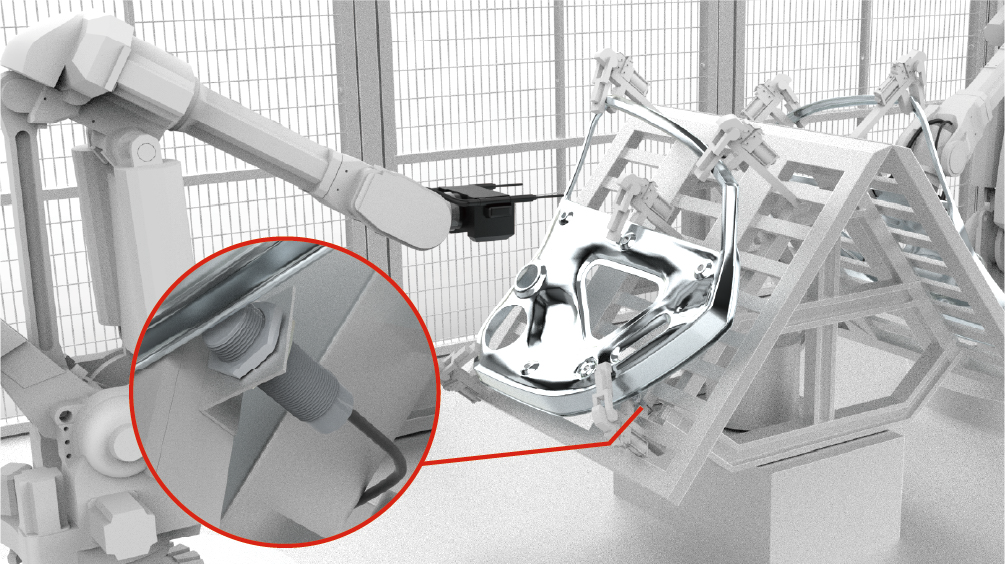
In the body shop, the white body begins to take shape. The vehicle body enters stations via skids, is fixtured into place, and then welded by robots. Positioning accuracy is paramount—misaligned workpieces cause weld deviation, compromising downstream assembly.
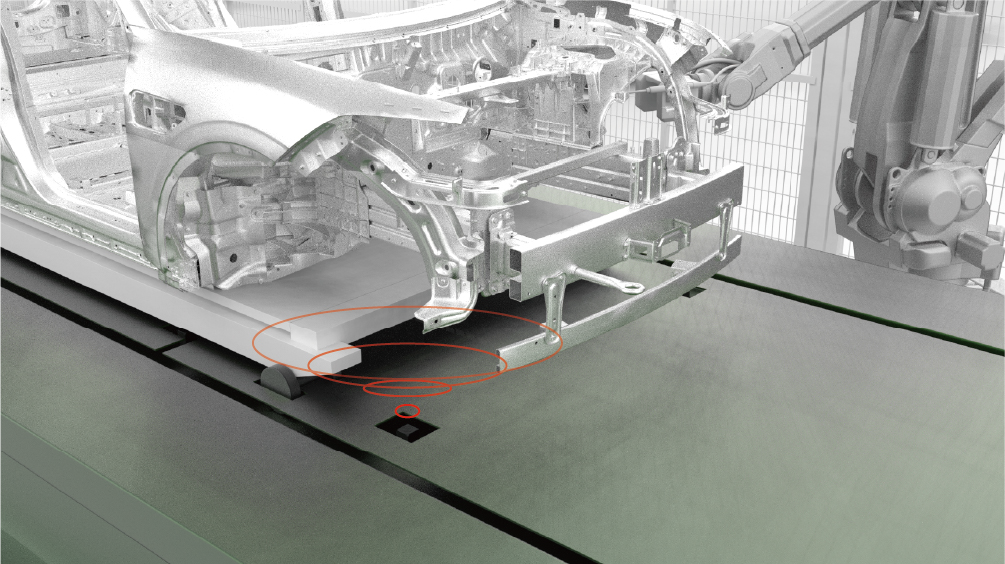
Skid positioning detection is a classic application. Sensors near locating points verify if the skid is accurately stationed, acting as an interlock signal to initiate robots or release the station. The LANBAO LE40E series of high-protection inductive sensors is well-suited for positioning tasks in welding environments.
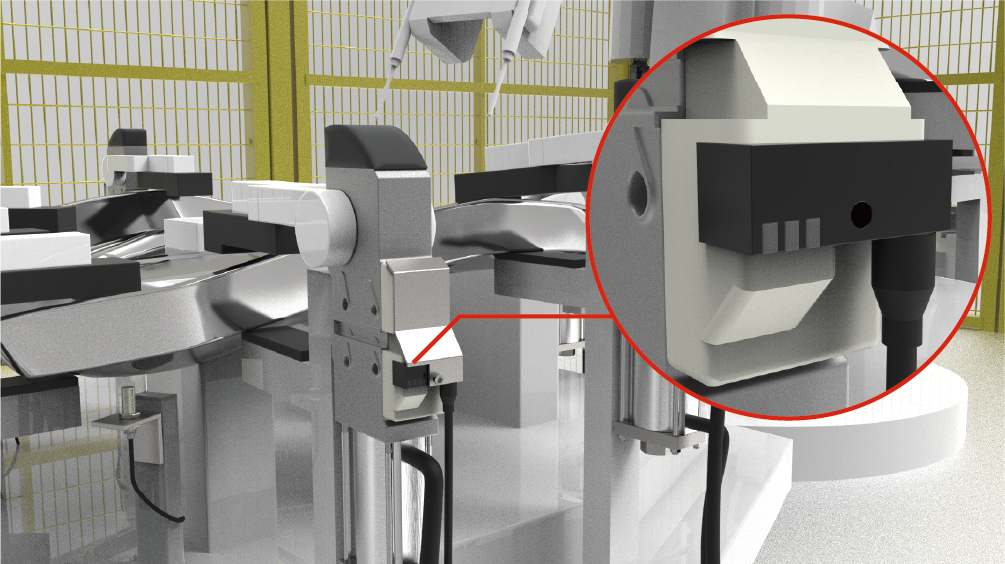
Clamp position detection is equally vital. Every step—opening, closing, gripping—requires confirmation. LANBAO LT18/20 series clamp sensors detect the two limit positions of clamps, helping systems verify fixture actions.
Part presence detection for components like doors and side panels is also crucial. Using LANBAO weld-immune inductive sensors such as the LR12X-A, LR18X-A, and LR30X-A series, systems can determine if metal parts are properly fixtured. In body shops, this isn’t merely about “signal presence”—it’s a foundational check impacting weld quality and equipment safety.
03. Paint Shop: Harsher Environment, More Diverse Detection
The paint shop differs from stamping or body shops. With moisture, paint mist, cleaning agents, and chemicals present, sensors demand higher stability, ingress protection, and environmental resistance.
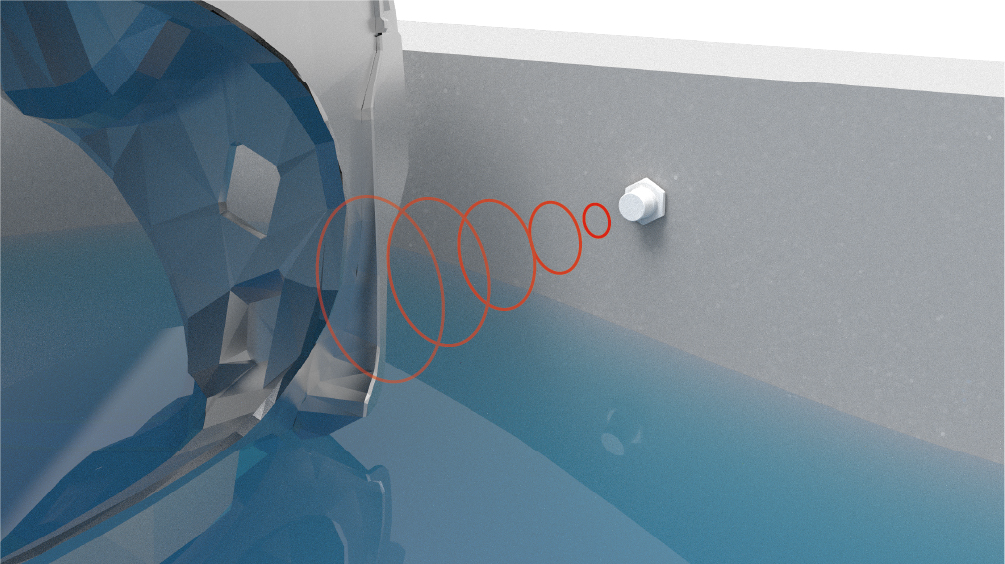
During electrocoating or dip-coating processes, tank fluid levels must remain stable. Low levels impair coating quality; abnormal levels disrupt subsequent steps. LANBAO Capacitive sensors like the CR18XT and CE53S series monitor liquid levels or non-metallic media here.
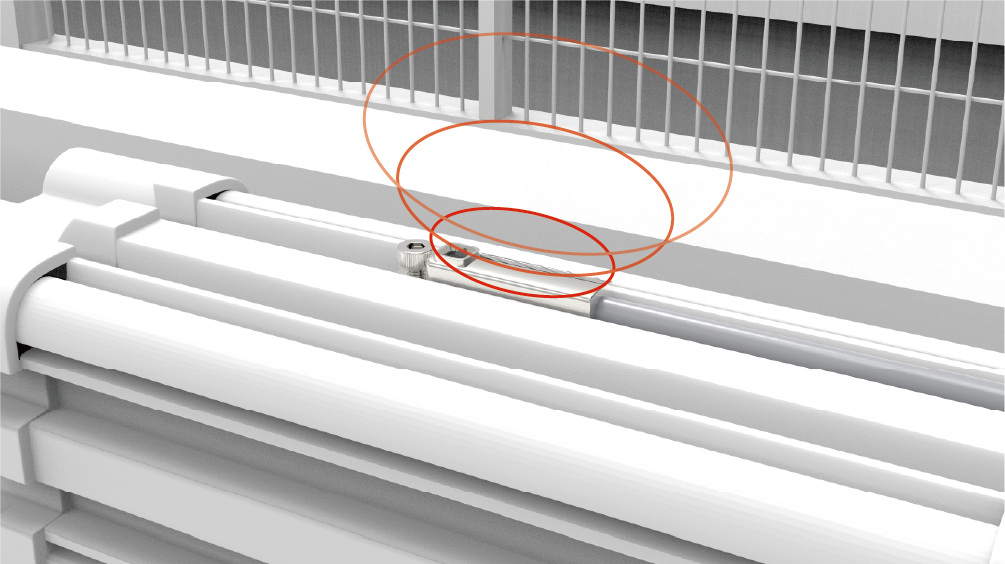
Cylinder positions on conveying mechanisms also require reliable feedback. Whether a cylinder is extended or retracted dictates if stopping, tensioning, or positioning actions can proceed. LANBAO FN04 series magnetic sensors detect piston positions, closing the loop for actuators.
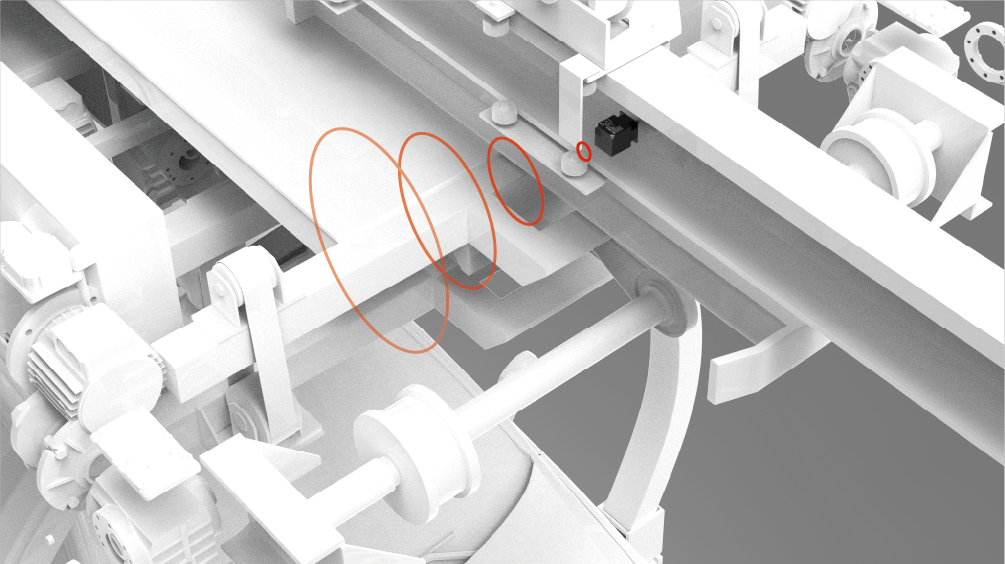
Along roller conveyors, skids, and pallet tracks, proximity sensors again serve as “position confirmers.” Whether a workpiece has reached its mark or if conveyance has drifted often hinges on these subtle signals.
04. Small Signals Dictate the Big Cycle
Proximity sensors frequently solve not complex puzzles, but the most fundamental confirmations on the line.
They may not be conspicuous, yet they appear at critical junctures: sheet detection on stamping lines, skid positioning on welding lines, clamp status on fixtures, fluid levels and cylinder feedback in paint shops, and pallet arrival on conveyors.
Only when these signals are stable can equipment actions continue. Only when positions are confirmed can robots activate. Only when status loops are closed can the line’s tempo avoid disruption by minor faults.
The higher the automation level in automotive manufacturing, the more indispensable these basic detections become. The value of proximity sensors lies here: they transform easily overlooked on-site conditions into signals that systems can recognize, evaluate, and trace.
Every accurate confirmation is a building block of stable production.
Post time: Jul-24-2026