
As components in the 3C electronics and semiconductor industries continue to shrink in size, traditional marking solutions struggle to adapt to the surfaces of miniature components. Glass-engraved Data Matrix (DM) micro codes have become a crucial means for process traceability and batch management of components. However, for ultra-small QR codes at the 0.81 mm level, constrained by factors such as size, glass transparency and reflectivity, and low engraving contrast, ordinary code-reading devices are highly prone to missed or erroneous reads. This causes material jams on the production line and interruptions in product traceability, directly affecting production yield.
In response to this industry pain point, we at Lanbao Sensing have completed specialized operational testing and launched a domestic, integrated precision code-reading solution.

The test sample for this session was a glass-based DM code, with a code size of only 0.81 mm × 0.81 mm and a barcode precision of 0.045 mm, required to carry 12 characters of information. Compared with conventional 12 mm QR codes, this micro code is almost indistinguishable to the naked eye. Coupled with the transparency and reflectivity of the glass material and shallow engraving lines, conventional code-reading equipment, limited by lenses, light sources, and algorithms, cannot capture the code details. Micro codes are widely used in optical devices and precision chip carriers; once identification fails, the data link of the entire production line breaks, bringing direct economic losses to enterprises.

To address this complex working condition, Lanbao adopted a complete solution consisting of the PID-M2023X-C-V (2.3 megapixel) code reader, paired with a 65 mm dedicated lens and an external point light source. The resolution of this entire hardware combination is better than 3 pixels per module, meeting the recognition requirements for 18×18 matrix micro DM codes. With a working distance of 65 mm and an effective field of view of 8 mm × 5 mm, it is suitable for the installation space of static code reading on production lines. The dedicated lens eliminates imaging distortion, the external point light source improves the reflectivity problem of glass materials, enhances the imaging contrast of engraved code patterns, and ensures the complete output of image details.
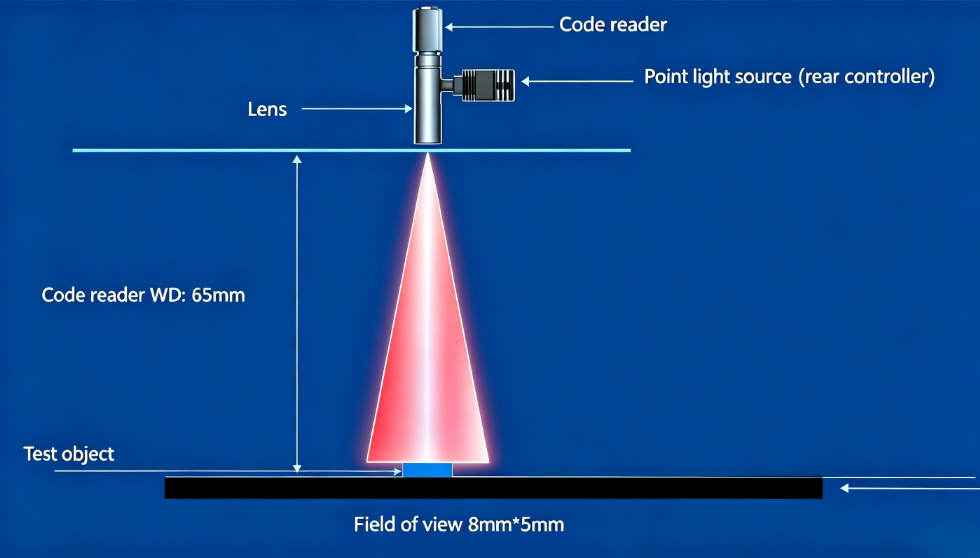
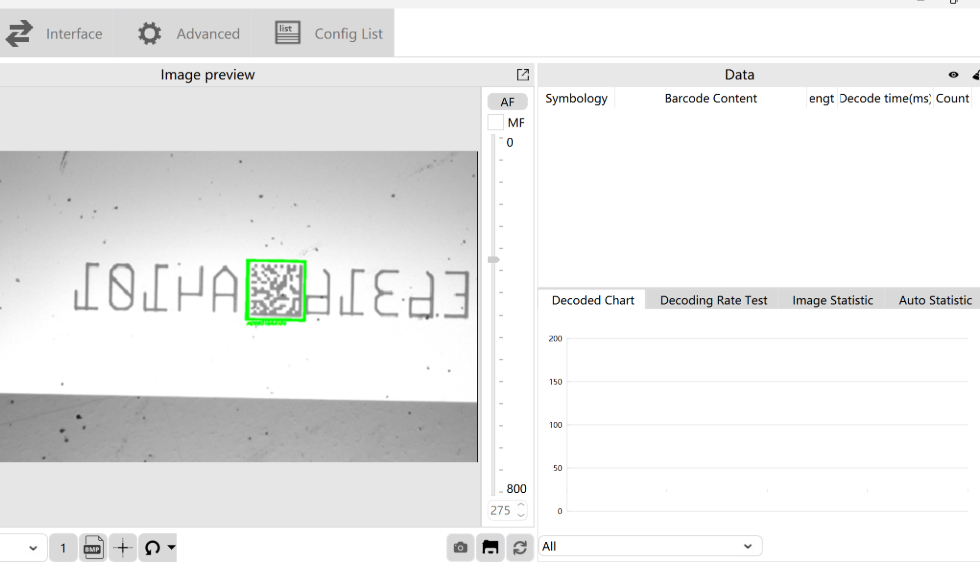
The laboratory conducted 500 consecutive cyclic code-reading simulation tests, simulating the uninterrupted working state of the production line. Ultimately, all 500 decodings were successful, with a code-reading success rate of 100% and an average decoding time of only 30 ms, exceeding the industry reliability standard of 99.99%. The software can quickly lock onto the QR code ROI area, completely parse all 12 characters, fully verifying the performance of the entire hardware configuration and decoding algorithm.
At the same time, laboratory data is for reference only in model selection. Micro code reading is highly sensitive to on-site working conditions. Actual production line implementation needs to avoid the following multiple risks:
• Avoid direct strong light interference and eliminate ambient light reflection;
• Ensure code integrity, as dirt, scratches, and defects on the code surface will reduce recognition rates;
• Control the amplitude of production line vibration, as slight vibrations can cause defocusing, directly leading to decoding failure;
• Standardize equipment installation to ensure the code reader's field of view completely covers the QR code, avoiding the code being truncated at the edge of the field of view. On-site debugging of installation distance and angle based on actual working conditions is required.
Currently, the domestic substitution process in smart manufacturing is accelerating, and machine vision code reading is the data entry point for industrial product traceability. The miniaturization of components is a major industry trend, and the demand for recognizing ultra-small codes and low-contrast codes on special materials continues to rise. Lanbao Sensing is deeply rooted in the industrial vision field, serving precision manufacturing industries such as 3C electronics, semiconductors, and photovoltaics. In addition to standardized code-reading products, we can also provide specialized testing and verification services for customers' special working conditions.
With a system solution integrating hardware, lenses, light sources, and algorithms, Lanbao Sensing solves the pain points of precision component identification, helps manufacturing enterprises establish a full product lifecycle traceability chain, and empowers the digital and intelligent upgrading of the manufacturing industry.
LANBAO PID-M20X-C Senso
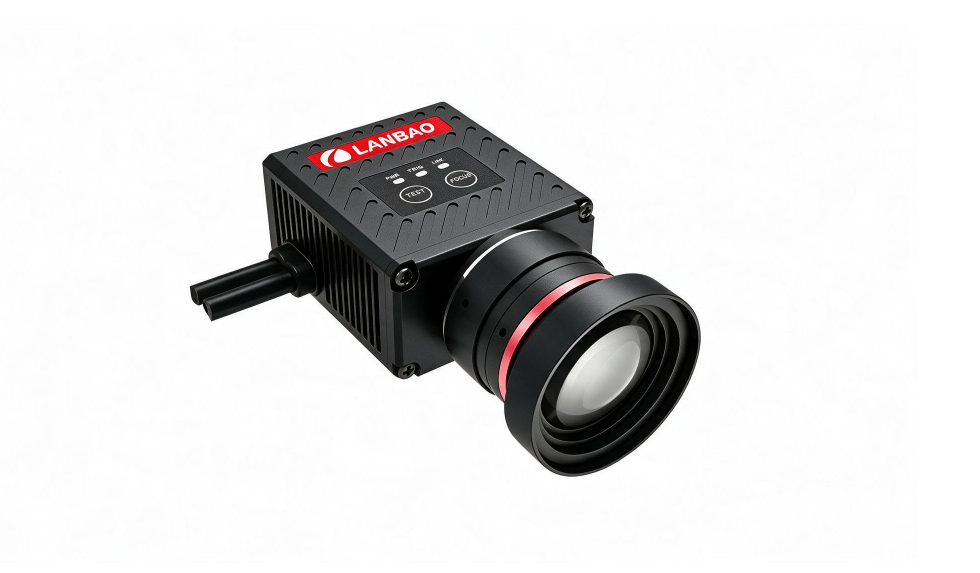
◆ Equipped with a high-performance image sensor;
◆ Built-in deep learning decoding algorithm for efficient reading of various barcodes and QR codes;
◆ Integrated cable and RJ45 Ethernet port;
◆ Supports auto-focus, significantly improving commissioning efficiency;
◆ Compact size with an industrial-grade design;
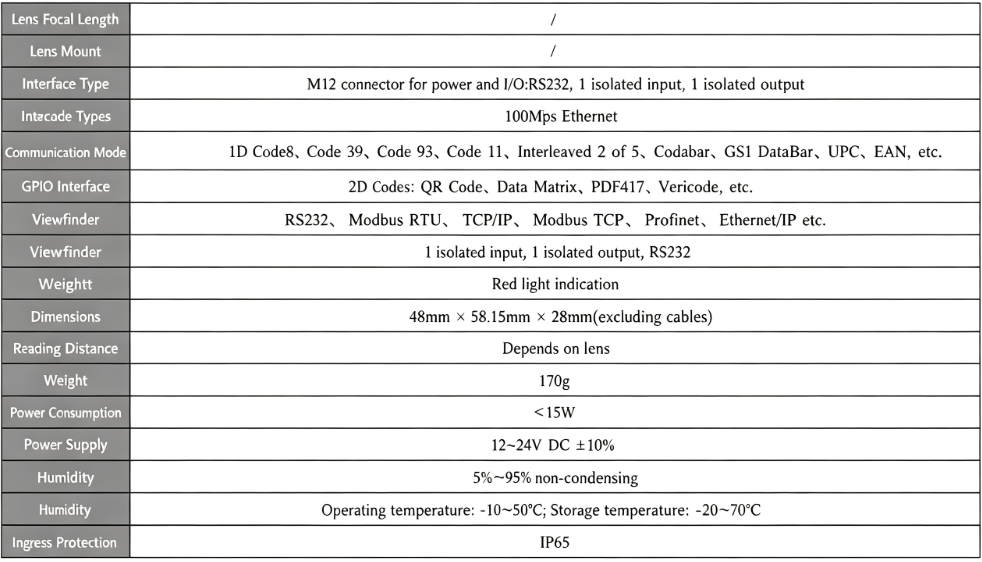
◆ Supports transmission protocols including TCP/IP, ModBus, PN , and EIP.
Post time: Aug-28-2026