
Currently, we stand at the convergence of traditional lithium batteries and solid-state batteries, witnessing the "inheritance and revolution" quietly awaiting eruption in the energy storage sector.
In the field of lithium battery manufacturing, every step—from coating to electrolyte filling—relies on the robust protection of safety and explosion-proof technologies. Leveraging the core advantages of intrinsic safety design, intrinsically safe inductive sensors enable precise positioning, material identification, and other critical functions in flammable and explosive environments. They not only meet the safety production requirements of the traditional lithium battery industry but also demonstrate irreplaceable compatibility in the production of solid-state batteries, thereby reinforcing the core safeguards for the safe and intelligent operation of both lithium and solid-state battery production lines.
Application of NAMUR Inductive Sensors in the Lithium Battery Industry
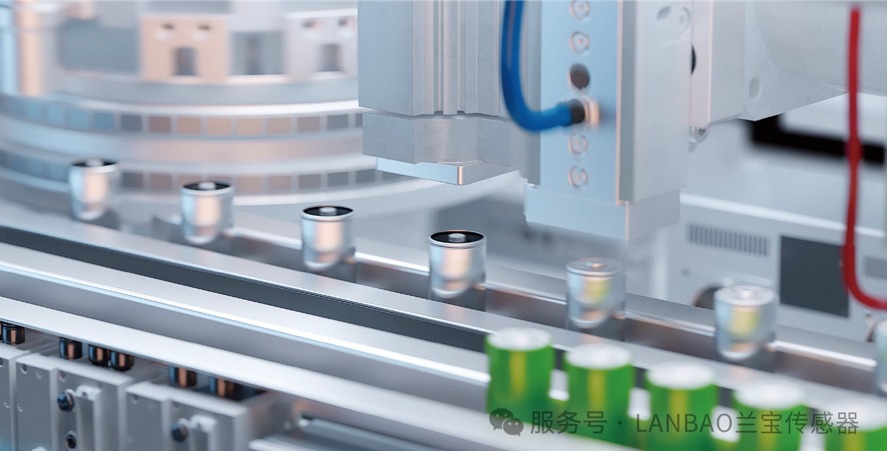
Cell manufacturing is the core of lithium battery production, involving key processes such as coating, calendering, slitting, winding/stacking, electrolyte filling, and sealing. These processes occur in environments where volatile electrolyte (carbonate esters) gases and anode graphite dust are present, necessitating the use of intrinsically safe sensors to prevent spark risks.
Specific Applications:
-
Positioning detection of metal bushings on electrode sheet tension rollers
-
Status detection of metal blade disks in slitting knife sets
-
Positioning detection of metal shaft cores on coating backing rollers
-
Status detection of electrode sheet winding/unwinding positions
-
Positioning detection of metal carrier plates on stacking platforms
-
Positioning detection of metal connectors at electrolyte filling ports
-
Status detection of metal fixture clamping during laser welding
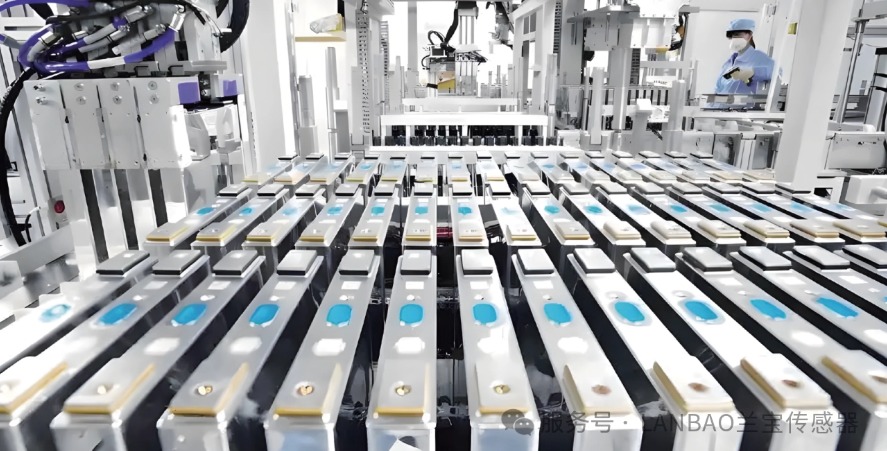
The Module/PACK assembly stage is the critical process of integrating battery cells into a finished product. It involves operations such as cell stacking, Busbar welding, and casing assembly. The environment during this stage may contain residual electrolyte volatiles or metal dust, making intrinsically safe sensors essential to ensure assembly precision and explosion-proof safety.
Specific Applications:
-
Positioning status detection of metal locating pins in stacking fixtures
-
Layer counting of battery cells (triggered via metal casing)
-
Positioning detection of metal Busbar sheets (copper/aluminum Busbar)
-
Positioning status detection of module metal casing
-
Positioning signal detection for various tooling fixtures
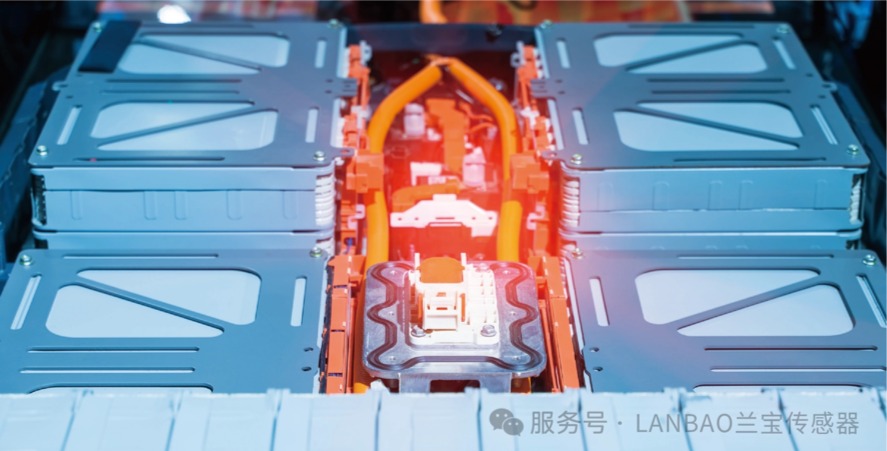
Formation and testing are critical processes for activating battery cells. During charging, hydrogen (flammable and explosive) is released, and volatile electrolyte gases are present in the environment. Intrinsically safe sensors must ensure the accuracy and safety of the testing process without generating sparks.
Specific Applications:
-
Position signal detection for various fixtures and tooling
-
Positioning detection of metal identification codes on battery cells (to assist scanning)
-
Position detection of equipment metal heat sinks
-
Detection of the closed status of testing chamber metal doors
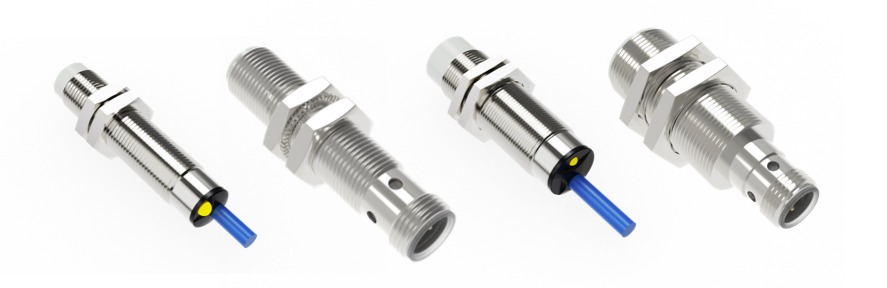
• Wide range of product specifications available, with sizes from M5 to M30
• 304 stainless steel material, with copper, zinc, and nickel content <10%
• Non-contact detection method, no mechanical wear
• Low voltage and small current, safe and reliable, no spark generation
• Compact size and lightweight, suitable for internal equipment or confined spaces
| Model | LRO8GA | LR18XGA | LR18XGA | |||
| Installation method | Flush | Non-Flush | Flush | Non-Flush | Flush | Non-Flush |
| Detection distance | 1.5mm | 2mm | 2mm | 4mm | 5mm | 8mm |
| Switching frequency | 2500Hz | 2000Hz | 2000Hz | 1500Hz | 1500Hz | 1000Hz |
| Output type | NAMUR | |||||
| Supply voltage | 8.2VDC | |||||
| Repeat accuracy | ≤3% | |||||
| Output current | Triggered: < 1 mA; Not Triggered: > 2.2 mA | |||||
| Ambient temperature | -25°C...70°C | |||||
| Ambient humidity | 35-95%RH | |||||
| Insulation resistance | >50MQ(500VDC) | |||||
| Vibration resistance | Amplitude 1.5 mm, 10…50 Hz (2 hours each in X, Y, Z directions) | |||||
| Protection rating | IP67 | |||||
| Housing material | Stainless Steel | |||||
• Intrinsically safe inductive sensors must be used in conjunction with safety barriers.
The safety barrier is installed in the non-hazardous area and transmits active or passive switch signals from the hazardous area to a safe location via the isolated safety barrier.
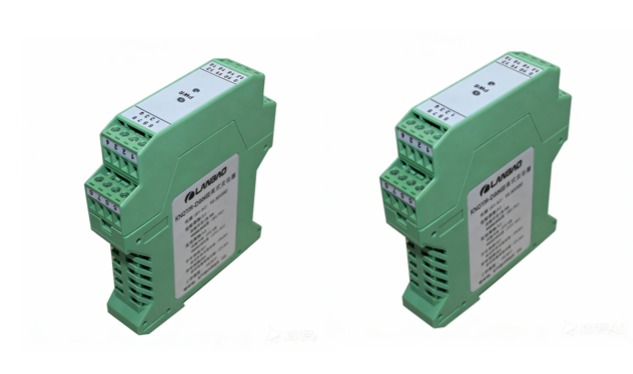
| Model | KNO1M series |
| Transmission accuracy | 士0.2%F.S. |
| Hazardous area input signal | Passive input signals are pure switch contacts. For active signals: when Sn=0, the current is <0.2 mA; when Sn approaches infinity, the current is <3 mA; when Sn is at the maximum detection distance of the sensor, the current is 1.0–1.2 mA. |
| Safe area output signal | Normally Closed (Normally Open) relay contact output, permissible (resistive) load: AC 125V 0.5A, DC 60V 0.3A, DC 30V 1A. Open-collector output: Passive, external power supply: <40V DC, switching frequency <5 kHz. Current output ≤ 60 mA, short-circuit current < 100 mA. |
| Applicable Range | Proximity sensor, active/passive switches, dry contacts (NAMUR inductive sensor) |
| Power Supply | DC 24V±10% |
| Power Consumption | 2W |
| Dimensions | 100*22.6*116mm |
Post time: Dec-24-2025