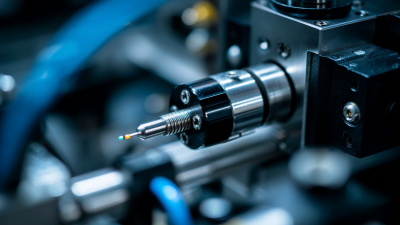
Proximity sensors might be tiny, but they've got a big job to do. They need to reliably detect a target—sometimes within just a few millimeters—and then tell the machine to respond. Think about a packaging line: an inductive sensor might check that a metal bracket is sitting right where it should be before the robotic arm swings into action. But a lot of things can throw them off: dust, vibration, what the target is made of, even how often the sensor is switching. It's the little things that really count.
So Grand View Research valued the global proximity sensor market at about USD 4.5 billion in 2023, and they’re projecting a 6.3% compound annual growth rate from 2024 to 2030 (that’s from their Proximity Sensor Market report, 2024). Sounds like there’s solid demand out there, right? But honestly, those numbers don’t tell you whether a specific supplier is actually a good fit. You still have to dig into things like sensing distance, response time, protection rating, output type, documentation—and don’t forget sample test results.
Jacob Fraden—who literally wrote the book on sensors, Handbook of Modern Sensors—gives us a handy starting point: “A sensor is a device that receives and responds to a signal or stimulus.” Sounds easy enough, right? But choosing one in practice? Not so much. When you're looking at China's proximity sensor manufacturers and suppliers, you can't just take product claims at face value. You have to dig into datasheets, factory capabilities, quality controls, and after-sales support. A polished catalog can catch your eye, but it won't tell you how the sensor actually performs on a real production line. Honestly, not every model is going to fit your setup. China’s supplier base is huge, with everyone from automation folks to machine builders and OEM suppliers. So you can’t just compare prices or jump on whoever replies fastest. Dig into the details — ask about repeatability data, operating temperature limits, and get specs that are actually specific to the model. And don’t take their word for it; verify everything on real samples. Sometimes the info they give you is incomplete, and that’s a red flag worth paying attention to.
A proximity sensor detects an object nearby without touching it. It converts a change in distance, field, or reflected energy into an electrical signal. Common types include inductive, capacitive, and photoelectric sensors. Each works differently, so the target material and sensing distance matter. No contact is needed.
Its core functions are presence detection, position checking, counting, and limit control. On a packaging line, a sensor can confirm that a carton reaches a set point before a conveyor moves. In a machine enclosure, it may detect whether a metal guard is closed. The output can trigger a controller, indicator, or alarm. Performance depends on installation, target shape, and surrounding conditions. Metal chips, moisture, or poor alignment can cause missed readings. Real setups are not always as tidy as a datasheet suggests.
Tips: Check the target material and required sensing range before selection. Leave room for adjustment during installation. Test with the actual object, not just a sample block. Keep the sensing face clean.
A proximity sensor detects an object without touching it. Its sensing method depends on what the object is made of and how it approaches the sensor. Inductive sensors create an electromagnetic field and detect changes caused by nearby metal. Capacitive sensors respond to changes in capacitance, so they can detect materials such as plastic, glass, or liquid. Photoelectric sensors use emitted light and measure its return or interruption. Ultrasonic types send sound pulses and estimate distance from the returning echo. No contact is needed.
The choice has practical consequences. A metal bracket may trigger an inductive sensor, while a plastic bottle may pass unnoticed. Dust, moisture, surface shape, and mounting distance can also affect readings. That distinction is easy to overlook. MarketsandMarkets’ 2023 proximity-sensor market report estimated the market at USD 4.3 billion in 2023 and projected USD 6.5 billion by 2028. This forecast reflects growing use across automation, but it does not mean every sensor suits every line. Test the actual target material and operating conditions; a neat bench result can change on a vibrating, dusty production floor.
China’s proximity-sensor market offers several technologies, each suited to different targets and factory conditions. Inductive sensors detect metal without contact, making them useful near moving steel parts or oily machine tools. Capacitive models can sense non-metallic materials, including plastic, powders, and liquids, but moisture or residue may affect their readings. Photoelectric sensors use light to detect objects across a gap. Ultrasonic sensors measure reflected sound and can handle varied surface colors, though soft materials may absorb sound.
MarketsandMarkets estimated the global proximity sensor market at USD 4.3 billion in 2023, forecasting USD 5.8 billion by 2028. This is a global estimate, not a China-only figure. It signals broad demand, but does not tell buyers which sensor fits a particular production line.
Fit matters. Check the target material, sensing distance, response time, and exposure to dust or washdown. A compact inductive unit may suit a metal fixture, while a photoelectric sensor may better detect cartons on a conveyor. Test the actual target. Datasheet ranges can differ from reliable performance on a crowded factory floor, and that gap deserves attention.
When comparing proximity sensors from China-based manufacturers and suppliers, start with sensing distance under real mounting conditions. IEC 60947-5-2:2019 defines test methods and terms for inductive and capacitive proximity switches. A catalog’s rated distance is not a guaranteed distance for every target. Metal type, target size, and nearby steel can change the result. Check the correction factors, then leave practical margin.
Also compare repeatability, hysteresis, switching frequency, and response time. These figures describe whether a sensor can detect a fast-moving part consistently. For a conveyor running at 1 m/s, a slow switching rate may miss closely spaced components. Check the actual output type, too: PNP or NPN, normally open or closed, and the required supply voltage. Small mismatches cause frustrating commissioning delays.
Housing and environment matter just as much. Confirm thread size, flush or non-flush mounting, cable or connector, operating temperature, and IP rating. IEC 60529 defines the IP enclosure classification system; an IP67 rating, for example, indicates protection against dust ingress and temporary immersion under specified test conditions. It does not guarantee suitability for every washdown setup. Catalog tables can look tidy. They rarely capture your exact bracket, cable route, or target surface. Test samples on the actual machine before placing a large order.
| Sensor Type | Typical Sensing Distance | Detectable Target | Typical Supply Voltage | Common Output Options | Typical Switching Frequency | Environmental Considerations | Common Applications | Key Selection Consideration |
|---|---|---|---|---|---|---|---|---|
| Inductive | Approximately 1–15 mm, depending on sensor size, mounting style, and target material | Metal objects; detection distance varies by metal type | Typically 10–30 V DC | PNP or NPN; NO or NC; two-wire versions are also available | From hundreds of hertz to several kilohertz, depending on model | Usually resistant to dust, oil, and vibration; check enclosure rating and metal-chip exposure | Machine tools, conveyors, position detection, and metal-part counting | Confirm target metal, required distance, flush or non-flush mounting, and available installation space |
| Capacitive | Approximately 2–25 mm; adjustable range depends on target and sensor design | Conductive and many non-conductive materials, including liquids, powders, plastics, and glass | Typically 10–30 V DC; AC-powered models are also available | PNP or NPN; NO or NC; two-wire versions are also available | Generally lower than comparable inductive sensors; often tens to hundreds of hertz | Moisture, dust buildup, and changing material properties may affect switching; check for adjustment capability | Level detection through non-metallic containers, material presence, and packaging lines | Test with the actual target and mounting surface; account for humidity and nearby materials |
| Photoelectric: diffuse-reflective | Approximately 0.1–2 m, depending on target reflectivity and optics | Most materials that reflect enough light; performance varies with color, finish, and angle | Typically 10–30 V DC | PNP or NPN; NO or NC; light-on or dark-on configurations | Typically hundreds of hertz to several kilohertz | Ambient light, dust, lens contamination, and highly reflective backgrounds can affect performance | Object presence, package detection, and short-range conveyor inspection | Check the target’s color and surface, background conditions, and required operating distance |
| Photoelectric: retroreflective | Approximately 0.1–5 m with a compatible reflector, depending on model | Objects that interrupt the light path between the sensor and reflector | Typically 10–30 V DC | PNP or NPN; NO or NC; light-on or dark-on configurations | Typically hundreds of hertz to several kilohertz | Dust or damage on the lens or reflector can reduce detection reliability; shiny targets may need polarization | Carton detection, conveyor counting, and presence sensing over moderate distances | Allow space for a reflector and consider polarized models for reflective targets |
| Photoelectric: through-beam | Approximately 1–20 m or more, depending on model and alignment | Objects that interrupt the beam between a separate emitter and receiver | Typically 10–30 V DC | PNP or NPN; NO or NC; light-on or dark-on configurations | Typically hundreds of hertz to several kilohertz | Requires alignment of two units; contamination or vibration can interrupt the optical path | Long-distance object detection, counting, and access or position monitoring | Choose when detection distance or small-target sensitivity is important and two mounting points are available |
| Ultrasonic | Approximately 0.05–3 m, depending on transducer and target | Many solid and liquid targets; detection is largely independent of color or transparency | Typically 10–30 V DC | Switching output or analog output; PNP and NPN versions are common | Usually lower than photoelectric sensors; commonly several to tens of hertz | Temperature, airflow, soft surfaces, target angle, and the sensor’s blind zone can affect readings | Liquid-level measurement, transparent-object detection, and distance monitoring | Check minimum range, beam shape, target angle, response time, and environmental temperature |
| Magnetic | Often a few millimeters to several centimeters; depends on magnet strength and orientation | A magnetic field, typically from a permanent magnet | Varies by design; electronic models commonly use low-voltage DC, while reed types may switch external circuits | Reed contact or solid-state switching output | Depends on the switching element; verify maximum operating frequency for the selected model | Nearby magnetic fields, magnet alignment, and temperature limits should be considered | Cylinder-piston position sensing, door status, and position detection in enclosed assemblies | Match the sensor to the magnet, required gap, switching logic, and installation orientation |
Note: Values shown are representative ranges for common sensor categories, not guaranteed specifications for a particular product. Actual performance depends on the model, target material and size, installation, wiring, and operating conditions. Verify the supplier’s datasheet and test the sensor in the intended application.
Evaluating Chinese proximity sensor manufacturers requires more than comparing unit prices. Ask how sensing distance is measured, since target material, size, voltage, and temperature can change results. Request a data sheet and test report for the exact model, not just a product family. Small details matter. A metal target on a clean bench may behave differently from a moving part exposed to oil or vibration.
Ask about incoming component checks, calibration, aging tests, and batch traceability. If a factory visit is not practical, request a live video walkthrough of production and inspection areas. Test samples with your own target material, then record sensing distance and response time across several units. A neat sample is not enough. Check that wiring diagrams, output type, protection rating, and operating limits match your equipment. Verify that any certificates apply to the specific product and test scope.
Communication after the sale matters too. Ask how the supplier handles technical questions, delayed shipments, and reported failures. Request clear written terms for replacement parts and engineering changes. Test it on-site. A checklist cannot predict every installation condition; a short trial near the actual machine may reveal weak detection or mounting problems. Some questions may still be unresolved, so note them before approving a production order.
Leading proximity sensor manufacturers and suppliers in China serve automation, packaging, machine building, and other industrial applications. Their product ranges may include inductive sensors for metal targets, capacitive models for non-metal materials, and photoelectric options for longer detection distances. A sensor’s listed range is only part of the decision. Target size, mounting style, switching frequency, and surrounding metal can all affect performance.
Details matter. Buyers can compare suppliers by checking drawings, wiring diagrams, test reports, and stated operating conditions. Ask whether samples can be tested on the actual machine, especially where vibration, coolant, dust, or tight installation space is involved. A clear response about connector types and lead times is useful too. So is documented inspection.
Manufacturing capabilities vary, even among suppliers with similar catalogs. Some offer custom cable lengths, housing dimensions, or output configurations; others focus on standard models and faster delivery. Request information about incoming-material checks, production testing, and batch traceability before placing a large order. Still, a polished catalog can hide practical gaps. I would not assume that every sensor performs equally well just because its specifications look similar on paper. A short trial under real operating conditions can reveal missed detections, false triggers, or installation issues before they disrupt a production line.
Proximity sensors serve different jobs across Chinese manufacturing, from counting parts on a conveyor to detecting a metal bracket inside a machine. Inductive models suit metal targets; capacitive types can detect some non-metal materials. Photoelectric sensors work over longer gaps, but dust, glare, and target color may affect performance. Small details matter. A sensor that works on a clean bench may behave differently beside a vibrating press or coolant spray.
Before choosing a supplier, match the sensor’s range, output type, response speed, housing, and ingress protection rating to the real installation. Ask for a datasheet and test samples against your target material, mounting distance, and operating temperature. Certifications need careful checking. Confirm that documents apply to the exact model and intended market, and review their scope and validity rather than relying on a general certificate image. Quality records and production traceability can also help when a batch behaves differently.
Sourcing discussions should cover minimum order quantities, sample lead times, customization limits, and how design changes are communicated. Request clear drawings and written specifications before approving a purchase. One easy mistake is comparing unit prices without including cable options, packaging, inspection, or replacement terms. That choice is not always neat. A few practical questions can expose gaps early, though no checklist replaces testing in the actual machine.
It detects nearby objects without physical contact. Its signal can trigger a controller, indicator, or alarm.
Inductive sensors detect metal targets, such as steel brackets or moving machine parts. Check the sensing distance against your actual setup.
Capacitive sensors can detect some non-metal materials, including plastic, powders, and liquids. Moisture or residue may cause unreliable readings.
Photoelectric sensors use light to detect objects across a gap. Dust, glare, and target color can affect them. Ultrasonic sensors use reflected sound, but soft materials may absorb it.
Match the target material, sensing range, response speed, output type, housing, and protection rating to the installation. Test the real object. Datasheet performance may not match a crowded factory floor.
Vibration, coolant spray, metal chips, moisture, and poor alignment can cause missed readings. Keep the sensing face clean and leave room for adjustment. Real installations get messy.
Ask for a datasheet, clear drawings, written specifications, and test samples. Check that certificates apply to the exact model and intended market.
Confirm minimum order quantities, sample lead times, customization limits, and replacement terms. Include cables, packaging, and inspection in price comparisons. Small costs add up.
Proximity Sensors detect the presence or approach of objects without requiring physical contact, supporting reliable monitoring and automation across many industries. They work by sensing changes in an electromagnetic field, reflected light, sound waves, or other signals. Common options available in China include inductive, capacitive, photoelectric, and ultrasonic sensors, each suited to different materials, distances, and operating conditions.
When comparing products, consider sensing range, accuracy, response time, output type, operating temperature, enclosure protection, and compatibility with existing equipment. Evaluate manufacturers and suppliers by reviewing their technical capabilities, quality-control processes, customization options, documentation, and after-sales support. Also confirm that products meet relevant certification requirements and are appropriate for the intended application. Careful sourcing should account for environmental conditions, installation needs, delivery schedules, and long-term availability, helping buyers select dependable sensors for their operational requirements.